

 Chaardham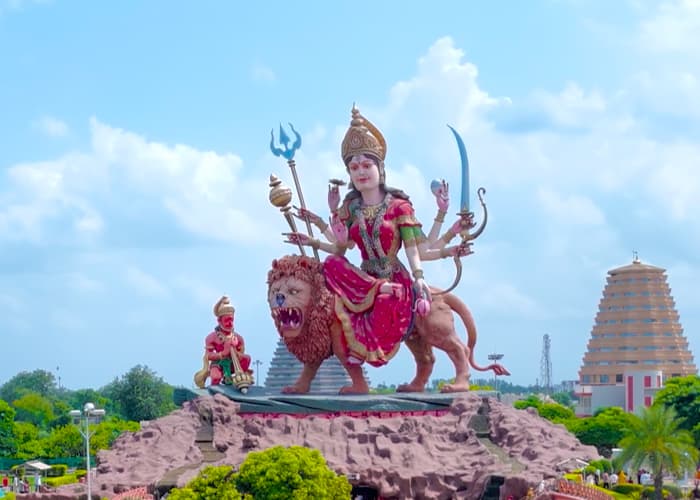
Have you ever experienced or paid attention to nights when strength does not come from within us? Did you? It comes from somewhere mystical, something that has watched over mothers and daughters for generations before we were born. Or there is a particular kind of tiredness that has nothing to do with sleep. It’s the tiredness from holding everything together, of smiling through a phone call when you did not have the energy.
On those bleak and gloomy nights, a diya is lit with hope, and your inner voice motivates you to chant with utter devotion, almost like a prayer: Jai Mata Di.
If you ask most of the devotees why they observe these nine nights? The answer is simple and clear. They get a feeling of being protected, of borrowing courage from a mother who never turns back on a child in need.
Devotees feel a sense of spiritual cleansing and a rise in positivity in them. And following that, they feel a sense of doing good to others and get rid of all the ego by hosting young girls at their home who are considered a mirror image of that Shakti.
That feeling is where Navratri begins, and the idea behind it has a name: Shakti, the living, divine feminine energy which devotees turn to when they find themselves in a loop of deteriorating strength and courage.
Why Do We Celebrate Navratri?
In India, behind every festival, tradition, or ritual, there is a long history that transcends to the present. There are two major historical happenings and tales that actually contribute to why do we celebrate Navratri.
The best-quoted narrative behind Sharad Navratri (Autumn/Maha) comes from the Devi Mahatmya, roughly seven hundred verses within the Markandeya Purana, one of Hindu tradition's eighteen major Puranas.
In it, the demon Mahishasura grows his terror; the combined energies of the gods created Goddess Durga, who fought with him fiercely for nine nights and won on the tenth day.
Some narratives also interpret it as a struggle against arrogance, fear, and attachment, with fasting becoming a devotee's own self-discipline.
The second happening that is believed to have shaped this celebration is the mythical story of Lord Rama praying to Durga Maa before defeating Ravana.
This celebration has different expressions in distinct regions: Durga Puja in Bengal, Garba in Gujarat, Dasara in Mysuru, and daily Devi worship across North India.
What Does Shakti Mean?
Shakti means power and force in Sanskrit. It is not simply another word for goddess. It is the pious and powerful energy through which the divine creates, sustains, and metamorphoses the universe. Shakti is something which is intangible that can be felt but not seen.
Any form amongst the nine forms of Goddess Durga worshipped during Navratri, whether gentle or fierce, is just an incarnation of Shakti. And during the Navratri festival, you feel the strong feminine energy of this Shakti in women, especially the young girls. If you dig deeper into Hinduism, women are considered a vessel of Shakti.
For a devotee, it can be understood simply: Shakti is the courage you didn’t know your soul was craving for. It could be in the form of the protection of a mother, who hugs you and holds you together when you face hard times and circumstances. It is the force that rises when everything else feels weak.
Shakti is not power; it is the presence that keeps you moving when you have nothing left to give. It is the fire that burns in the dark. It is the light that shows up when you can’t see the way.
The Nine Forms of Maa Durga
Each night belongs to one form of the Goddess, together tracing a journey from grounding to fulfilment: Maa Shailputri, daughter of the Himalayas, for stability; Maa Brahmacharini, for discipline; Maa Chandraghanta, tiger-borne, for courage; Maa Kushmanda, radiant creator, for vitality; Maa Skanda, mother of Kartikeya, for compassion; Maa Katyayani, the warrior, against negativity; Maa Kalratri, the dark night, for confronting inner darkness; Maa Maha Gauri, dressed in white, for purity and peace; and Maa Siddhidatri, giver of spiritual accomplishments, for completion.
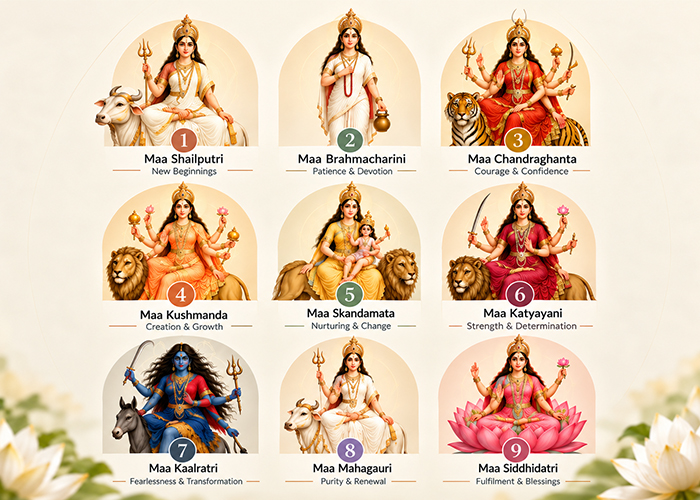
Day | Form | Significance |
1 | Maa Shailputri | Grounding and mental stability |
2 | Maa Brahmacharini | Discipline and devotion |
3 | Maa Chandraghanta | Courage and protection |
4 | Maa Kushmanda | Vitality and creativity |
5 | Maa Skanda | Motherhood and compassion |
6 | Maa Katyayani | Courage against negativity |
7 | Maa Kalratri | Confronting inner darkness |
8 | Maa Maha Gauri | Peace and purification |
9 | Maa Siddhidatri | Fulfilment and completion |
Ashtami, Navami and Vijayadashami
Ashtami and Navami, the ninth days of the festival, are widely seen as the most sacred. Many households mark Ashtami and Navami with Kanya Puja, worshipping girls as living forms of the Navadurga and offering Ashtami and Navami food and gifts to the girls.
Sharad Navratri ends with Vijayadashami or Dussehra, commemorating Maa Durga’s victory and, in North India, Rama’s victory over Ravana.
Why Navratri Still Matters Today
The nine nights still offer a structured pause in difficult times: simpler eating, a nightly reason to sit still with family and pray rather than scroll.
It is also believed that the nine nights depict the different stages of human life and experiences. Not only that, but it is also believed that it is these nights that humans connect with the cosmic rhythm and feminine energy.
Maa Katyayani’s courage speaks to anyone facing a hard decision; Maa Kalratri’s honesty pacifies anyone avoiding their own darkness; Maa Maha Gauri’s calm speaks to anyone hoping peace is still possible.
Experience the Spirit of Shakti at Chaar Dham Vrindavan
Whether you want to experience the spiritual cleansing or you want to carry this devotion beyond home prayer, you may find the Maa Vaishno Devi Dham at Chaar Dham Vrindavan worth the visit. Built by Dr. J C Chaudhry, founder and managing trustee of Chaar Dham, it recreates the spiritual atmosphere of the Vaishno Devi shrine, with a gufa leading to a magnificent Maa Vaishno Devi statue beside Lord Hanuman.
The Navadurga themselves are present inside this cave, so devotees can experience all nine forms in one place. This is not the Vaishno Devi pilgrimage in Jammu and Kashmir. It is a location in Vrindavan where one can feel the power of Shakti. The place also includes Shiv Dham, Radha Krishna Dham, and Shani Dham.
If you wish to connect deeply with the nine forms and energies of Durga Maa, you should definitely make a visit. The atmosphere there is full of devotion and serenity. In the cave, you can witness the divinity of the Goddess's nine forms and offer your prayers and offerings. You can rest assured that the visit will change you, and the journey is for the soul.