

 Chaardham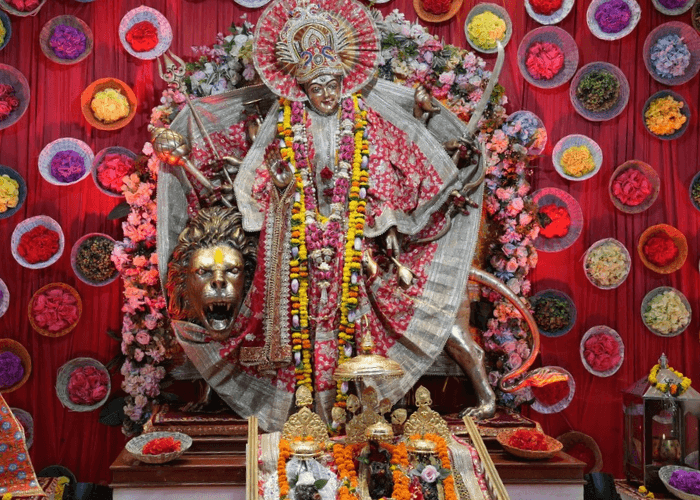
Navratri, in simple words described as the "Nine forms of Goddess Durga”. It is a major Hindu festival that is celebrated with complete devotion & joy across India. The core meaning of celebrating Navratri is that it signifies the victory of good over evil energy by honoring Goddess Durga & her nine unique avatars.
In addition to that, over these nine days, people fast, pray & dress up in a special color chosen for each day to stay connected to the festive spirit. This festival is celebrated all over India and in different ways.
For example, in Gujarat, Navratri is celebrated in huge crowds where they dance all night doing Garba & Dandiya. Furthermore, in Northern Indian cities, families gather to watch plays that tell the story of the Ramayana. However, on the very last day of Navratri, Dussehra is celebrated, as it ends on a high note, bringing everyone together with a fresh feeling of joy & hope.
Navratri 2026 Important Dates
Now, understanding the important dates of Navratri 2026 will help you plan accordingly for festive outfits, fasting & prayers. Once you know the correct dates, it then becomes much simpler and easier to follow the right significance of this festival.
In 2026, Sharad Navratri will span nine holy days, starting from October 11 & culminating with Dussehra on October 20.
To help you prepare for daily rituals and wear the traditional daily colors, here is the complete day-wise schedule for Navratri 2026:
Day | Date (2026) | Goddess Worshipped | Daily Color |
| Day 1 | October 11 (Sunday) | Maa Shailputri | Yellow |
| Day 2 | October 12 (Monday) | Maa Brahmacharini | Green |
| Day 3 | October 13 (Tuesday) | Maa Chandraghanta | Brown |
| Day 4 | October 14 (Wednesday) | Maa Kushmanda | Orange |
| Day 5 | October 15 (Thursday) | Maa Skandamata | White |
| Day 6 | October 16 (Friday) | Maa Katyayani | Red |
| Day 7 | October 17 (Saturday) | Maa Kalratri | Blue |
| Day 8 | October 18 (Sunday) | Maa Maha Gauri | Pink |
| Day 9 | October 19 (Monday) | Maa Siddhidatri | Peacock Green |
Significance of Navratri
When it comes to the significance of Navratri, the nine forms of Goddess Durga are recognised as: Shailputri, Brahmacharini, Chandraghanta, Kushmanda, Skandamata, Katyayani, Kalratri, Maha Gauri & Siddhidatri. So, now, if you need to understand the significance of all nine Goddesses well, then you will have to read the section below.
Maa Shailputri-
The first Goddess is Maa Shailputri, who is the daughter of King Himalaya. This goddess represents power, courage, & spiritual stability. Maa Shailputri travels on Nandi, who is the ride of Lord Shiva. On the other hand, she holds a lotus flower in her left hand, which represents peace & purity. She is the first goddess who is worshiped on the first day of Navratri.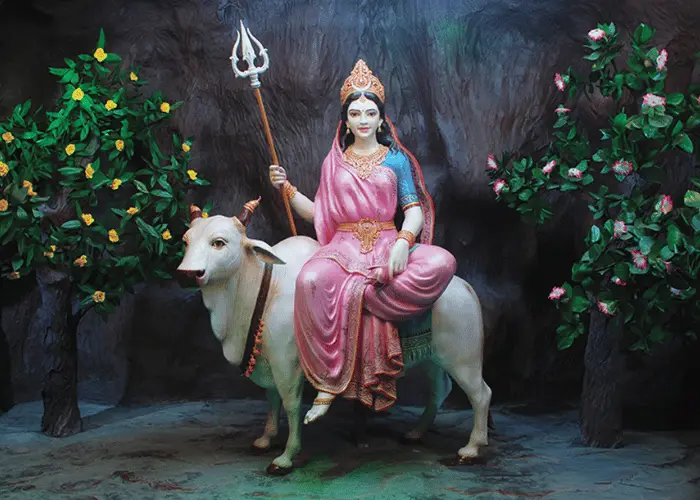
On the first day of Navratri, wearing yellow clothes & worshiping her with a pure heart helps devotees receive her blessings.
Maa Brahmacharini-
The second goddess worshiped on the occasion of Navratri is Maa Brahmacharini. Maa Brahmacharini is the goddess who makes devotees feel complete in peace, devotion, and inner strength. Maa Brahmacharini holds a rosary (japmala) in her right hand & a water pot (kamandal) in her left hand, which symbolizes the power of meditation & peace.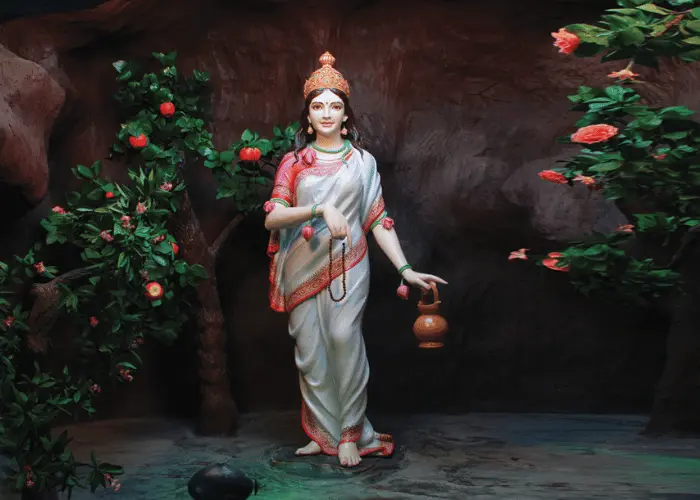
Wearing green on the second day of Navratri represents the goddess's special blessings of prosperity, self-control & the power of penance.
Maa Chandraghanta-
Maa Chandraghanta is the third goddess who is worshiped on the third day of Navratri. By worshiping this goddess, all the devotees' hearts are filled with peace, courage, & devotion. Maa Chandraghanta sits on a tiger, and the golden aura of the goddess and her shining face make devotees more spiritual. Besides, the goddess has 10 hands out of ten arms; eight hold weapons, while the other two are in the blessing and protection mudras.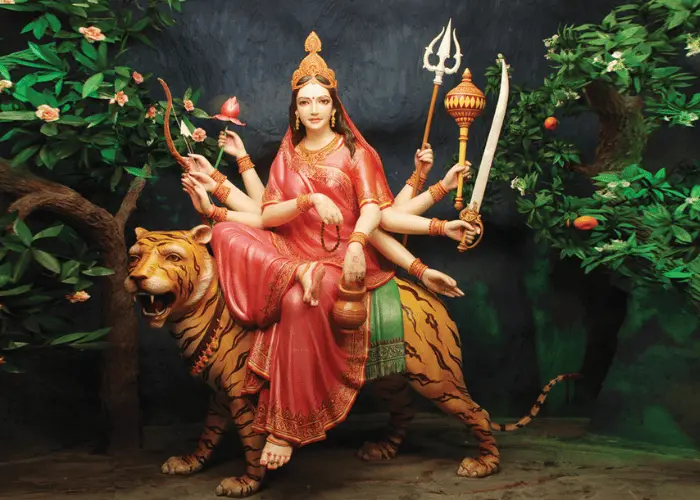
Brown color is the favorite of Maa Chandraghanta, and wearing this on the third day will bless you with courage, victory, and peace.
Maa Kushmanda-
The fourth day of Navratri is celebrated as Maa Kushmanda. Devotees on the fourth day of Navratri will be filled with deep devotion, courage & peace. Maa Kushmanda sits on a Lion. The depiction of Maa Kushmanda shows eight arms, from which six hands hold powerful weapons, while the other two carry a lotus flower and a rosary (japmala).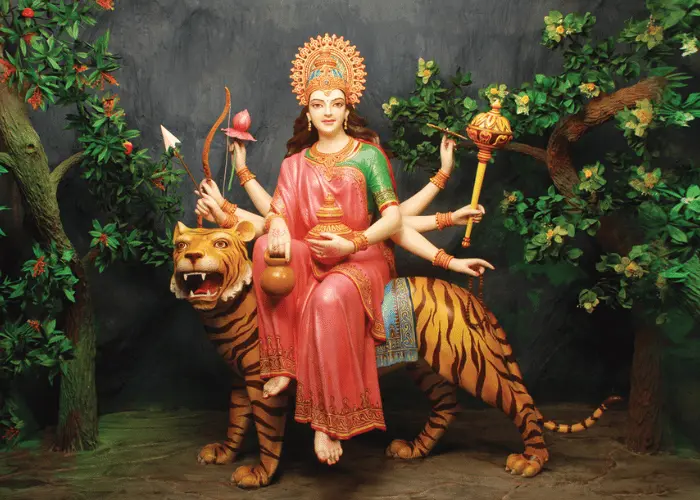
The favorite color of Maa Kushmanda is Orange. So, devotees wearing orange on this particular day get good health, prosperity, & divine energy.
Maa Skandamata-
The fifth day of Navratri is celebrated in accordance with Maa Skandamata. Maa Skandamata refers to Lord Kartikeya (also referred to as Kumar & Shanmukha). In addition to that, Mata means mother, which is often described as “the Mother of Lord Kartikeya”.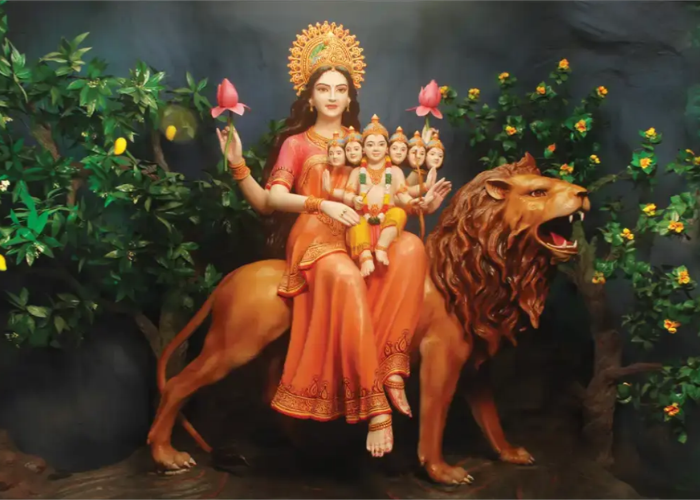
The favorite color of Maa Skandamata is White.
Maa Katyayani-
The sixth Goddess worshipped on the occasion of Navratri is Maa Katyayani. Maa Katyayani, as the daughter of Rishi Katyayan, this goddess represents courage, energy, & victory. This goddess travels on a lion, & her four hands hold a weapon, a lotus flower, grant blessings, & offer protection from fear. She is especially worshipped by devotees to gain inner strength and remove obstacles in marriage.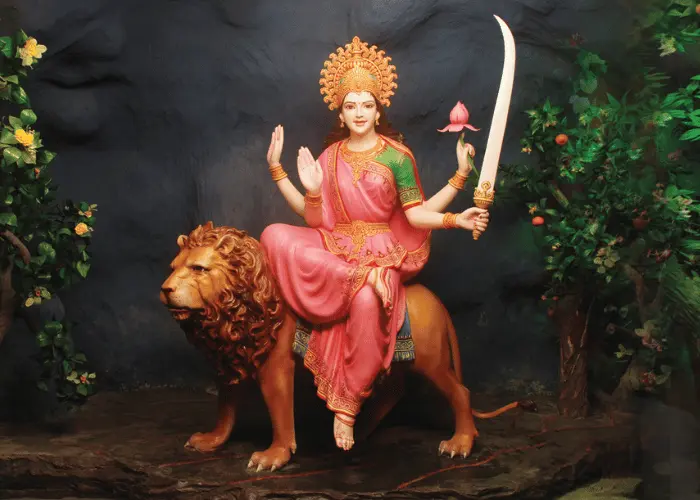
Red color is the favorite of Maa Katyayani, and wearing red on the sixth day will bless you with strength, harmony, and power.
Maa Kalratri-
The seventh day of Navratri is worshipped in honour of Maa Kalratri. The goddess is known as the most fierce yet compassionate form of Goddess Durga. It represents the ultimate victory over fear, ignorance, & evil. Maa Kalratri travels as a donkey & has a dark complexion with untied hair. The goddess has four hands, from which two offer blessings & protection, while the other two hold a sword & an iron hook.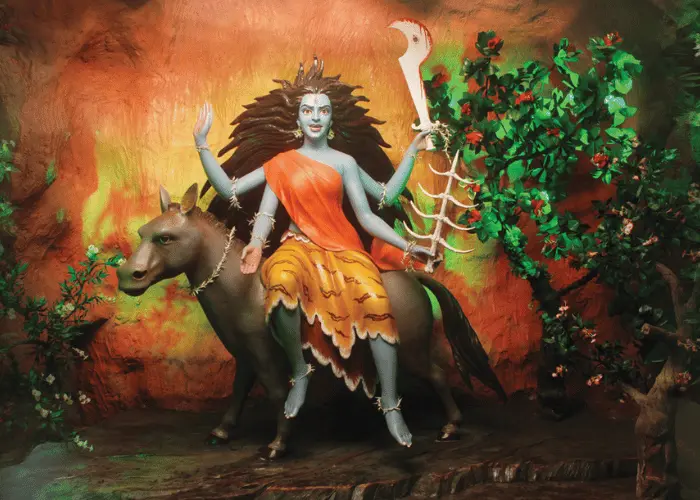
Blue is the favorite color of Maa Kalratri & wearing blue blesses devotees with courage, victory over enemies, & freedom from fear.
Maa Maha Gauri-
On the eighth day of Navratri, the Goddess worshipped is Maa Maha Gauri. It is the goddess known for her extremely fair & radiant beauty, like the moon. Maa Mahagauri travels on a bull & has four arms & Maa Maha Gauri holds a trident & a damru in two hands, while her other two hands display gestures of giving blessings & fearlessness.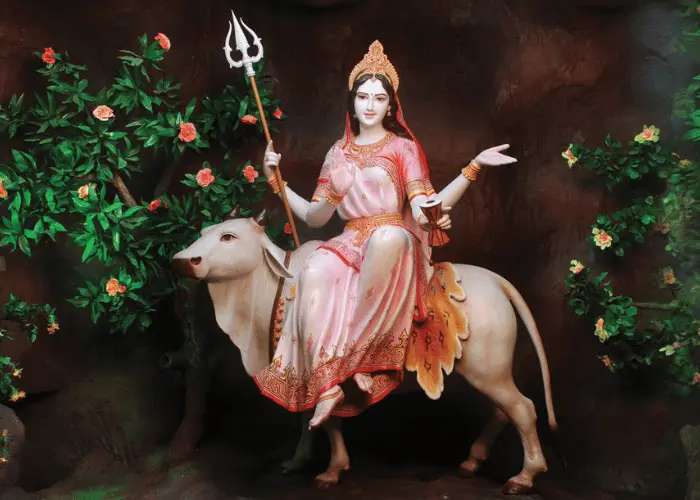
Pink color is the favorite of Maa Maha Gauri, and wearing pink on (Ashtami) will bring beauty, prosperity, & lifelong peace.
Maa Siddhidatri-
The ninth Goddess worshipped on the occasion of Navratri is Maa Siddhidatri. Known as the giver of divine powers (Siddhis) & ultimate knowledge. The goddess represents complete perfection & spiritual fulfillment. Maa Siddhidatri rides a lion and is depicted with four hands, holding a conch, discus, mace, and lotus.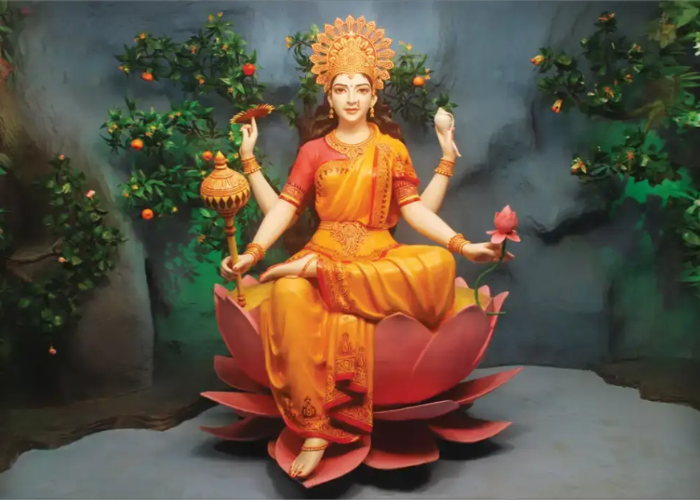
Peacock Green is the favored color associated with Maa Siddhidatri, and wearing this color on the ninth day (Navami) will bless you with success, divine wisdom, and eternal peace.
The Tradition We Follow at Chaar Dham Vrindavan
At Chaar Dham Vrindavan, devotees can visit Maa Vaishno Devi Dham and feel the divine power & energy of Goddess Durga. Every devotee on the occasion of Navratri gets to watch floral decorations and festive lighting in and around the Maa Vaishno Devi Dham. In addition to that, devotees walking within the temple will experience the grand daily aartis, Vedic yagnas & special Kanya Pujan rituals on Ashtami & Navami.
Puja Guide
Chaar Dham during Navratri 2026 invites devotees to attain peace, health & prosperity in their lives. The first day of Navratri starts with the Ghatasthapana (Kalash Sthapana) on Day 1 (October 11). Further, it leads to Kanya Pujan on Ashtami and Navami, worshipping the Goddess with a pure heart that fills your life with positive energy.
Essential Daily Puja Steps:
Ghatasthapana (Day 1): Clean your puja space, place a sanctified clay pot with barley seeds (jowar), and establish the Kalash filled with holy water, mango leaves, & a coconut to welcome Goddess Durga.
Morning & Evening Aarti: Light a ghee lamp (diya) and offer fresh flowers, incense, and bhog according to the daily color scheme of the Goddess.
Chanting & Fasting: Recite the Durga Saptashati or simple Navdurga mantras daily while observing a satvik fast to cleanse the mind and body.
Kanya Pujan & Havan: On the final days, invite nine young girls (representing the nine forms of the Goddess), wash their feet, offer them halwa-puri-chana as prasad, and seek their blessings.
Conclusion
In the end, Navratri 2026 is one of the most auspicious times to reconnect with your inner strength, practice devotion, & welcome divine blessings. Thus, by honoring the nine forms of Goddess Durga from Maa Shailputri to Maa Siddhidatri and embracing their special daily colors, you can experience deep peace, joy & spiritual growth.