

 Chaardham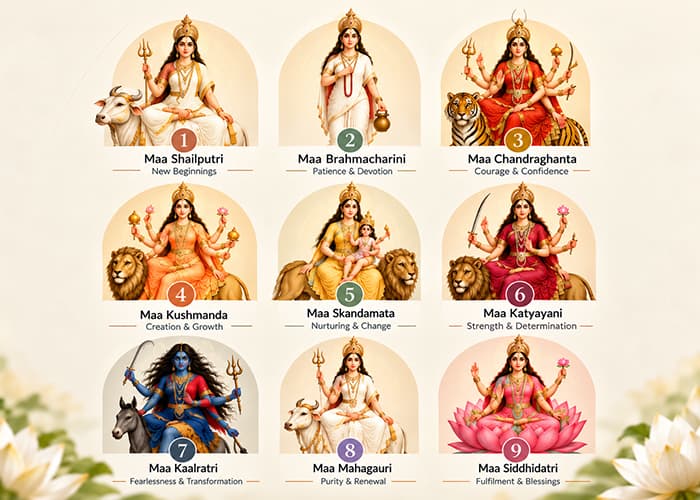
In Hinduism, Navratri is one of the most joyful & holy festivals, which is celebrated across India with enthusiasm spanning nine nights of prayer, fasting, & spiritual joy. Further, the word “Navratri” simply means "nine nights", which is a special time dedicated to Goddess Durga, who has accomplished victory over negative forces.
When it comes to each form of Maa Durga, each one of them represents a different set of qualities, such as power, devotion, courage, motherly love, & pure wisdom. Every day of Navratri is worshiped by millions of devotees because each day of it is dedicated to a divine avatar of Maa Durga.
As distinguished, every form carries its own unique story, sacred weapons, favorite daily colors, & special blessings. Ultimately, it is believed that praying & worshiping Maa Durga on these nine days brings faith and self-discipline, which leads to a peaceful and calm life.
Understanding the Navdurga: What Each Goddess Teaches Us
In the guide below, we are going to explore the story, symbolism, & spiritual significance of all nine forms of Goddess Durga. They begin with Maa Shailputri on Day 1 to Maa Siddhidatri on Day 9. We will also discover their favorite colors, traditional weapons, & how worshipping each avatar brings strength, peace, & prosperity into your everyday life.
Maa Shailputri
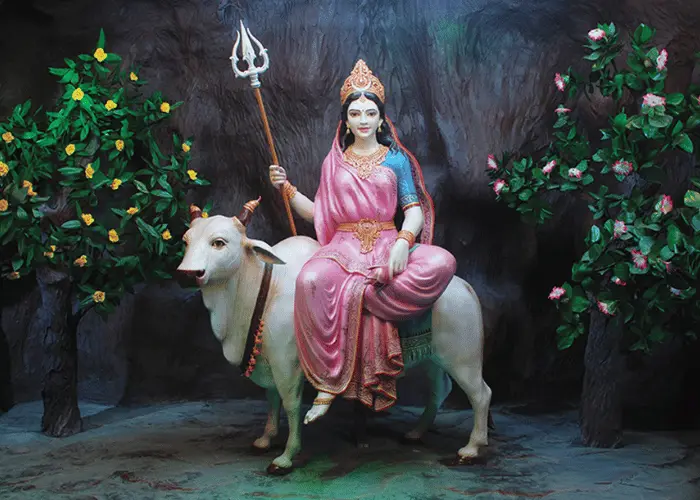
Maa Shailputri is the first form worshipped on Day 1 of Navratri. The Goddess is the daughter of King Himalaya (the mountain god), and Maa Shailputri is also known as Goddess Parvati.
How she looks: Maa Shailputri travels on a bull named Nandi. Maa Shailputri holds a trident (Trishul) in one hand & a lotus flower in the other.
Her significance: Maa Shailputri represents power, patience, & strong stability. Praying to her gives devotees courage & a good start to their spiritual journey.
Maa Brahmacharini
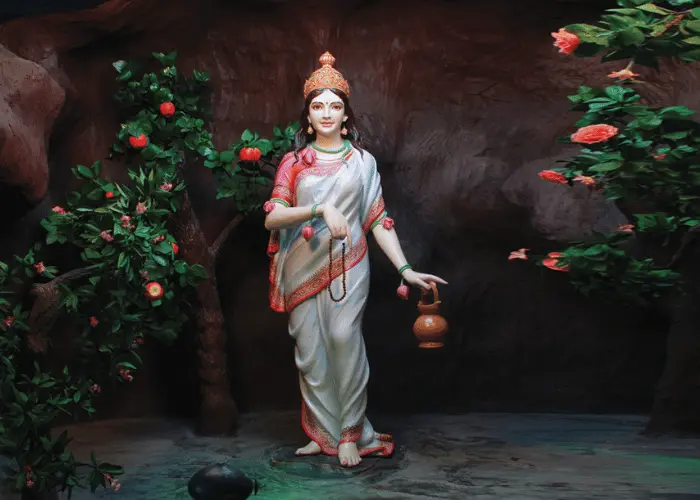
The Second Day of Navratri is celebrated for the Goddess Maa Brahmacharini. The Goddess is known for her devotion practices, which are self-discipline & deep prayer.
How she looks: Maa Brahmacharini walks barefoot wearing simple white clothes. The goddess holds a rosary (Japa Mala) in her right hand & a water pot (Kamandal) in her left hand.
Her significance: Maa Brahmacharini represents self-control, patience, & inner peace. The prayers given to her give devotees strength, wisdom, & the power to overcome difficult situations.
Maa Chandraghanta
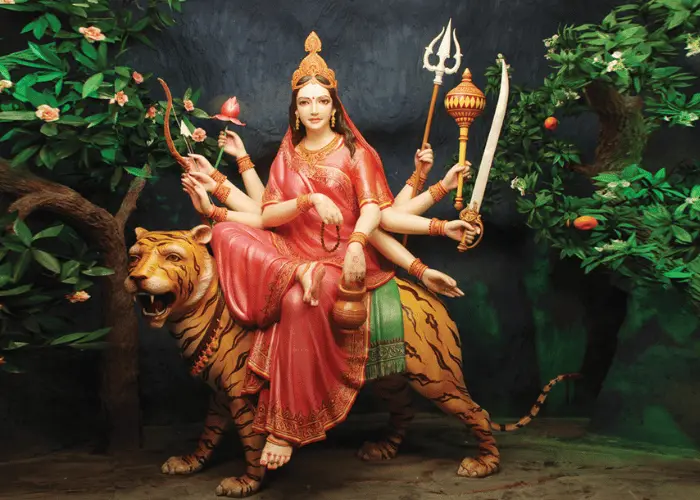
Maa Chandraghanta is the third form worshipped on Day 3 of Navratri. The Goddess gets her name from the half moon shaped like a bell on her forehead.
How she looks: Maa Chandraghanta travels on a golden tiger. Furthermore, out of her ten hands, eight hold weapons, while the other two offer blessings & protection to her devotees.
Her significance: Maa Chandraghanta represents bravery, peace, & protection. Praying to her removes fear & bad thoughts, filling devotees with courage, confidence, & peace of mind.
Maa Kushmanda
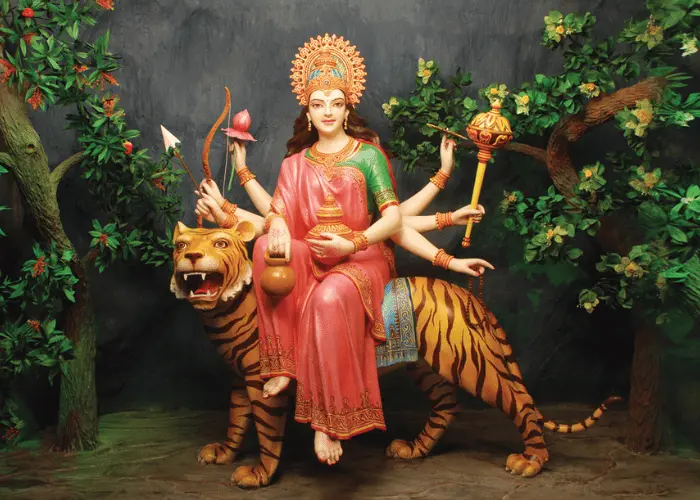
Maa Kushmanda is the fourth form worshipped on Day 4 of Navratri. The Goddess is believed to be the creator of the universe, who brought light & life to the world with her gentle smile.
How she looks: Maa Kushmanda rides a lion. The goddess has eight arms holding weapons, a lotus flower, a rosary (Japa Mala), & a pot of divine nectar.
Her significance: Maa Kushmanda represents light, good health, & divine energy. The significance of praying to her brings prosperity, clarity of mind, & good health.
Maa Skanda
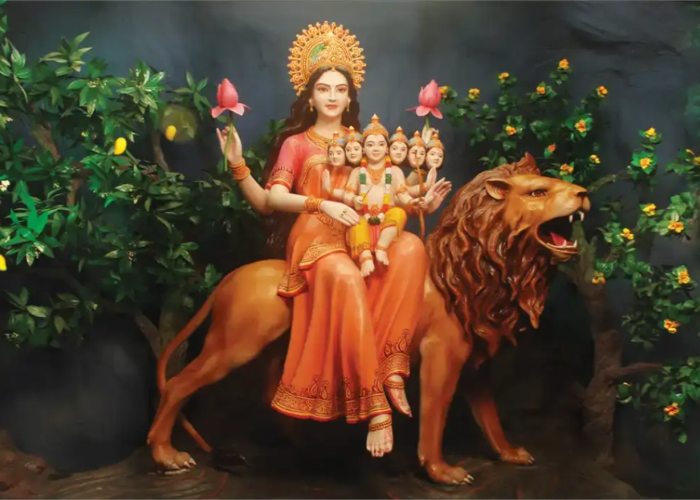
Maa Skanda is the fifth form worshipped on Day 5 of Navratri. The Goddess is the loving mother of Lord Skanda (also known as Kartikeya), who led the gods to victory.
How she looks: Maa Skanda sits on a lion or a lotus flower. The goddess has four arms & holds her infant son, Lord Skanda, in her lap while carrying lotus flowers in two of her hands.
Her significance: Maa Skanda represents pure motherly love, warmth, & protection. Praying to her grants blessings for the entire family, peace of mind, & spiritual wisdom.
Maa Katyayani
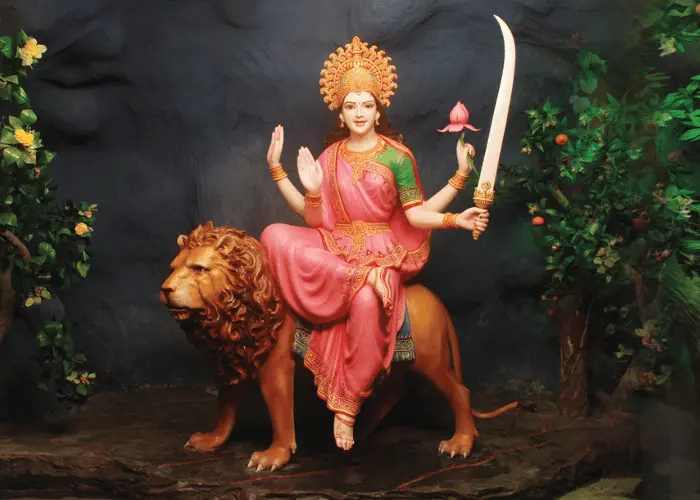
Maa Katyayani is the sixth form worshipped on Day 6 of Navratri. The Goddess was born as the daughter of the great sage Katyayan to defeat evil forces & destroy the demon Mahishasura.
How she looks: Maa Katyayani rides a ferocious lion. The Goddess has four hands holding a sword & a lotus flower, while her other two hands offer blessings & protection.
Her significance: Maa Katyayani represents courage, inner power, & victory over evil. Praying to her removes obstacles, especially difficulties related to marriage, & gives devotees strength & self-confidence.
Maa Kalratri
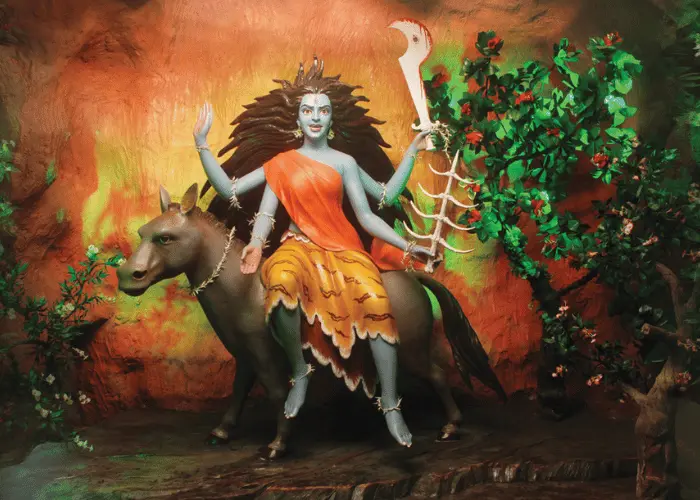
Maa Kalratri is the seventh form worshipped on Day 7 of Navratri. The Goddess is the fierce form of Durga who destroys darkness, evil spirits, & negative energies.
How she looks: Maa Kalratri travels on a donkey & has a dark skin tone like the night, with wild, untied hair. The goddess has three glowing eyes & four hands, holding a sword & an iron hook, while her other hands grant safety & blessings.
Her significance: Maa Kalratri represents freedom from fear, protection, & destroying negativity. Even though it looks scary, the goddess is known as Shubhankari because praying to her brings good luck, safety, & victory over fears.
Maa Maha Gauri
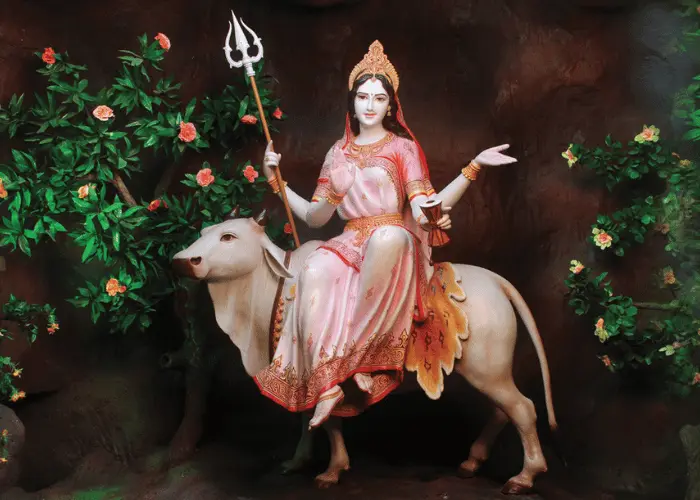
Maa Maha Gauri is the eighth form worshipped on Day 8 (Ashtami) of Navratri. The Goddess represents extreme fair beauty, purity, and absolute peace.
How she looks: Maa Maha Gauri rides a white bull and wears pure white or light clothes. Maa Maha Gauri has four arms holding a trident (Trishul) & a small drum (Damru), while her other two hands display gestures of giving blessings and protection.
Her significance: Maa Maha Gauri represents grace, purity, & lifelong peace. Praying to her cleanses past mistakes, removes suffering, & brings beauty, calmness, and prosperity to life.
Maa Siddhidatri
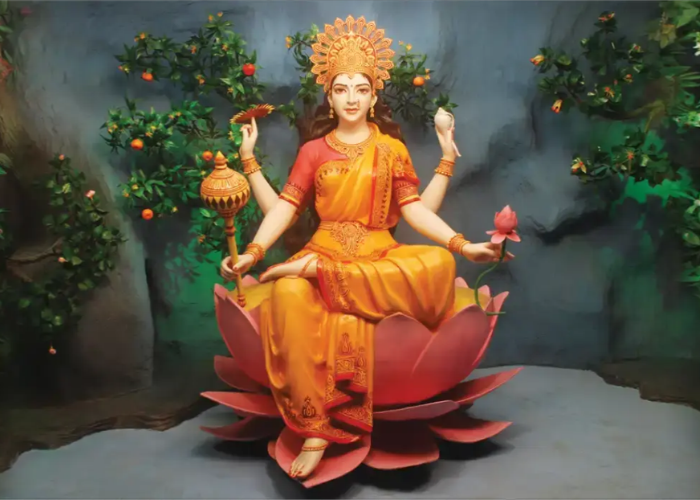
Maa Siddhidatri is the ninth form worshipped on Day 9 (Navami) of Navratri. The Goddess is the giver of supernatural powers (Siddhis), supreme wisdom, & spiritual success.
How she looks: Maa Siddhidatri sits gracefully on a lotus flower or rides a lion. The goddess has four hands holding a conch shell (Shankh), a discus (Chakra), a mace (Gada), & a lotus flower.
Her significance: Maa Siddhidatri represents perfection, ultimate knowledge, & liberation (moksha). When you pray to her grants success in life, fulfills all pure desires, & completes the spiritual journey.
Final Words
Lastly, understand that the significance of Navratri is quite important because on these days, devotees visit all nine forms of Goddess Durga. In addition to that, praying on these particular days brings peace, positive energy, & spiritual strength into our lives.