

 Chaardham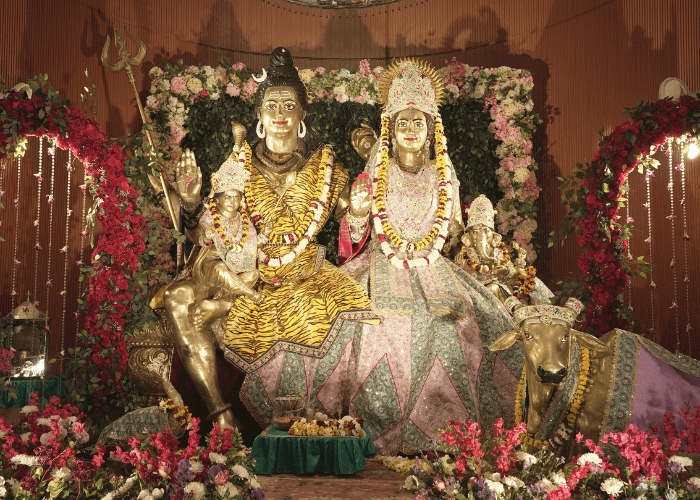
The Chaar Dham Temple is located in the rich town of devotion, Vrindavan, where the temple provides a rich experience to devotees of the Four Major Dham, i.e, Shiv Dham, Radha Krishan Dham, Shani Dham and Maa Vaishno Dham.
In this blog, we will give you a Complete Guide to Shiv Dham at the Chaar Dham Temple Vrindavan. A strong space dedicated to the energies of Lord Shiva, the destroyer of evil, who is responsible for changes of consciousness and who brings stillness in this fierce World.
Whether you are a devotee, a traveller or a spiritual seeker visiting Vrindavan, Shiv Dham at Chaar Dham temple is something you can’t miss. This guide will tell you about the origin, attraction, and how to worship at Shiv Dham to make your visit to Chaar Dham Temple, Vrindavan, more fulfilling and meaningful.
Hindu Mythology Story of Lord Shiva
Known for his full wisdom and paradox, Lord Shiva is also known as Mahadev (the greatest god or the Devon ke Dev Mahadev), the creator and the destroyer, the cosmic dancer and the silent yogi. the householder and the ascetic.
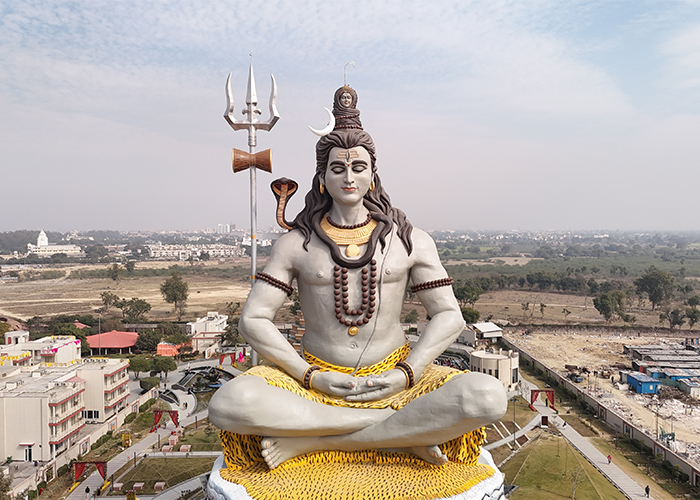
According to Hindu Mythology, it is said that Lord Shiva is sitting on Mount Kailash, where he can be found in his meditation form and is away from the worldly illusions. However, he is very loving and caring towards his devotees; thus, he always answers his worshippers and their prayers. Lord Shiva is also known for his great role in balancing the Universe. Lord Shiva is known as the creator of the universe, the preserver of the universe and the destroyer of the universe, along with Lord Brahma and Lord Vishnu.
The most famous story of Lord Shiva is the Samudra Manthan (Churning of the Ocean). Lord Shiva drank the deadly poison (Halahala) when it was going to destroy the universe, since Shiva wanted to save everybody. This turned Lord Shiva’s throat blue, and hence the name 'Neelkanth' was given to Shiva.
Shiva is also called the Adiyogi, the first silent yogi, who honoured the practice of meditation and yoga for mankind. Lord Shiva's appearance is the symbol of awareness, stillness, and freedom from ego and attachment. This divine nature is aptly articulated in Shiv Dham in Vrindavan, and the devotees can relate to Lord Shiva not only as a deity but as a state of being.
The Guinness World Record Holder “Trishul” at Shiv Dham
The Trishul, which is a holy emblem of Lord Shiva, is the most spiritual sight of Shiv Dham.
This magnificent Trishul of Lord Shiva is not only an architectural miracle but also a spiritual proclamation. The Trident at Shiv dham is the Largest Trishul in the World, and it can be seen coming from a long distance, because the Trishul is associated with Shiva, having the ultimate command on the three basic elements of existence: Creation (Srishti), Preservation (Sanrakshan), Destruction (Samhara).
The three prongs of the Shiva Trishul indicate the overcoming of the three gunas, i.e., Sattva (purity), Rajas (activity), and Tamas (inertia), which helps put devotees and worshippers in a higher state of consciousness.
Visitors take a stop at Chaar Dham to reflect, meditate, and take photographs, but most importantly, have a moment to look into their souls. The Trident is a reminder that we can also attain balance within ourselves, the same way that Shiva maintains balance in the universe.
How Devotees Worship Lord Shiva
Lord Shiva is known to be very easily pleased (Bholenath), and when offered even the most basic of offerings with pure devotion, he responds.
The followers of Shiv Dham engage in age-old but highly intimate rituals in an attempt to find the blessings:
- Jal, Doodh Abhishek – By doing Jal or Doodh Abhishek over Shivling, you purify negativity and surrender. Worshippers of Lord Shiva feel that it helps to cleanse negativity from the mind and provides peace of mind.
- Offering Bel Patra – Lord Shiva is believed to be very sacred to the leaves of the Bel (Bilva) tree. Offering Bel Patra leaves to Lord Shiva is a sign of humility, devotion, and abiding by the ego.
- Chanting Mantras – The chanting of the “Om Namah Shivaya” mantra echoes all over Shiv Dham. The recitation of this mantra jaap is thought to soothe your mind, increase the level of your consciousness, and lead you closer to divine energy.
- Lighting Incense and Diyas – When you light a diya, you eliminate darkness and ignorance. The incense fragrance then starts to add to the divine ambiance of the Shiv dham, which helps to enhance the experience of meditation.
- Special Fasts and Days – Devotees visit Shiv Dham on Mondays (as Monday is known as a day of Shiva) and on festivals like Shivratri and Mahashivratri, when the temple is the hub of extreme celebrations and devotion. At Shiv Dham, simplicity is in the beauty of the worship, and there are no strict restrictions but an open door to the divine. One can observe a fast on Mondays.
Darshan Guide for Shiv Dham
Visiting Shiv Dham at Chaar Dham Temple, Vrindavan, is not merely about paying a visit to the deity itself, but it is an experience where you encounter an energy, change and awareness.
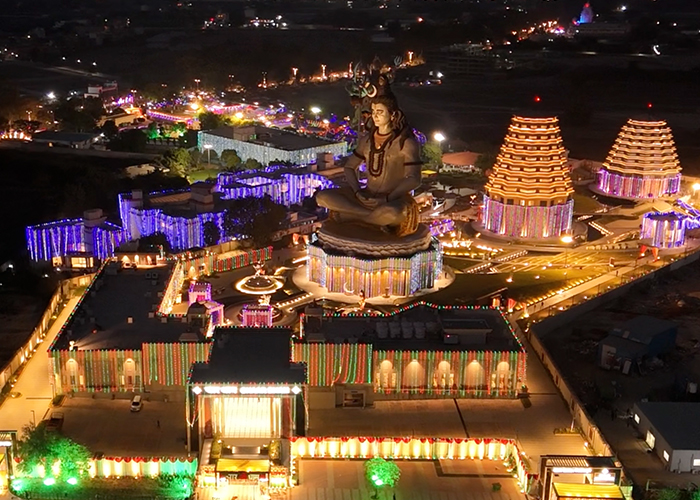
Here’s a complete guide to help you plan your darshan at Shiv Dham, Chaar Dham Temple, Vrindavan:
- Best Time to Visit Shiv Dham at Chaar Dham – Early Mornings and evenings are the best times to have darshan at Shiv Dham. The peaceful atmosphere enhances your spiritual experience. Also, the morning and evening Aartis are very divine.
- Aarti Timings at Shiv Dham – The Aarti at Shiv Dham has important significance. The rhythmic chanting, the sound of bells ringing, and the lights of the diya provide a powerful and soothing feeling.
- Behaviour and Dress Code to Follow – However, there is no dress code, but be mindful to dress modestly and respectfully. Do not make noise within the temple premises to maintain the temple's divine energy.
- Photography and Exploration at Shiv Dham – Photography is not permissible in some places; please be respectful and avoid taking pictures or videos, but instead experience the divine aura of the Dham and Temple.
Other Dhams
While visiting Chaar Dham Vrindavan, you not only visit Shiv Dham but also visit other holy places such as Radha Krishna Dham, Shani Dham, and Maa Vaishno Devi Dham.
This enables you to get the full spiritual experience at one location, and your visit will be integral.
Spiritual Experience beyond Rituals
The most important thing about Shiv Dham Temple is not only its architecture or the practices, but the energy it contains. Shiv Dham is a place where Silence speaks louder than words, Stillness is more powerful than Actions.