A Grand Symbol of Cosmic Order, Time, and Dharma
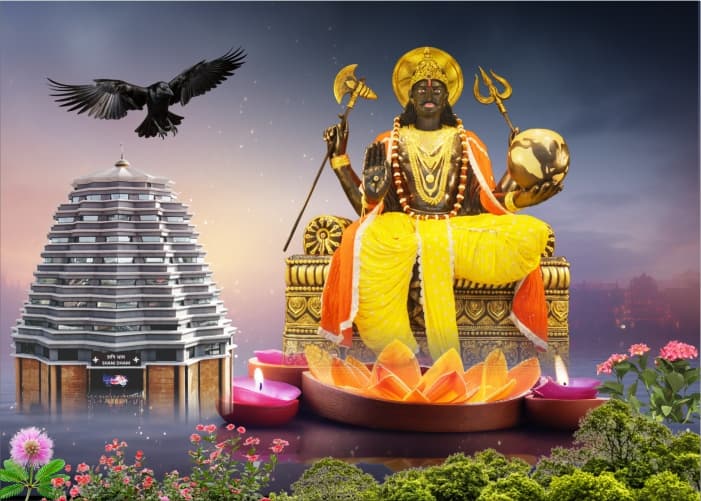
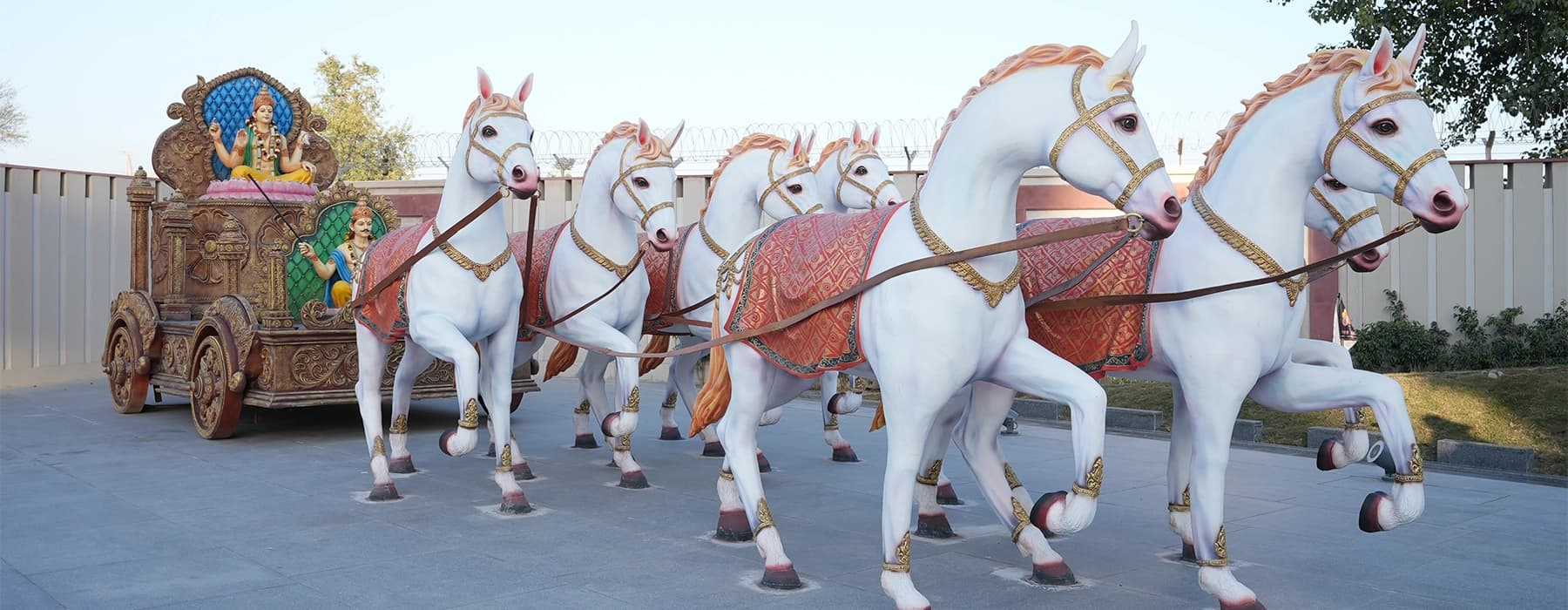
The Shani Dham Temple at Chaar Dham is not just a center of reverence for Lord Shani, but also houses a magnificent and spiritually charged Sun Chariot (Surya Rath), which stands as a beacon of cosmic wisdom and divine light. This chariot is a unique confluence of mythological, astrological, and cultural symbolism, deeply rooted in the Vedic tradition. The chariot's impressive dimensions—42.5 feet in length, 12 feet in width, and 11 feet in height—reflect not only its grand scale but also its religious and philosophical significance. Since Lord Shani is believed to be the son of Surya (the Sun God), the presence of the Sun’s chariot in this temple is profoundly meaningful.
This divine chariot represents not only the radiance and vitality of Surya, but also emphasizes deeper teachings about karma, time, and justice—all of which are intricately linked to the roles of both Surya and Shani. While the Sun bestows life and energy, Shani delivers justice based on one’s actions, emphasizing the eternal bond between illumination and accountability. To behold the Surya Rath at Shani Dham is to experience a surge of inner energy and enlightenment. The chariot serves as a spiritual reminder that, like the ever-moving Sun, we too must remain steadfast on the path of righteous action. With commitment, discipline, and truthful deeds, the darkness of life can be dispelled.
Vedic Symbolism of the Surya Rath: A Sacred Journey of Light and Time
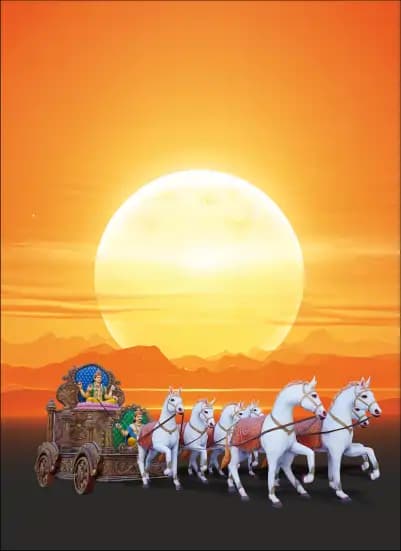
In Hindu scriptures and Puranic literature, Surya is revered as the embodiment of energy, light, and the life force. Beyond being a major deity, he is also regarded as the controller of time, direction, and the cycles of seasons that sustain the universe. His chariot, known as the "Saptashwa Rath" (Chariot of Seven Horses), is a symbolic representation of this divine role.
The Seven Horses – Vedic Metaphors of Cosmic Rhythm
The seven horses pulling Surya’s chariot are not just mythical steeds—they symbolize the seven Vedic meters (chhandas): Gayatri, Brihati, Ushnik, Jagati, Trishtubh, Anushtubh, and Pankti. These are used in sacred hymns and represent rhythmic balance in the universe.
They also correspond to:
- The seven rays of the Sun
- The seven colors of sunlight (as shown in the prism spectrum)
- The seven days of the week
Together, they represent the cosmic rhythm, balance, and divine order of the universe. The chariot, thus, is a symbolic reminder that nature operates on a divinely orchestrated and precise system.
Aruna – The Charioteer of the Sun
The charioteer of the Sun is Aruna, the elder brother of Garuda and son of Sage Kashyapa. He is typically depicted in a red hue, symbolizing the glow of the rising sun. Aruna signifies the divine guidance and control needed to regulate the immense power of Surya. Mythologically, Aruna is believed to have the divine vision and restraint to handle the Sun’s intense brilliance, guiding it across the sky from east to west.
The Wheel of the Chariot and the Twelve Spokes
The Sun’s chariot has only one wheel, symbolizing time (Kaal). This wheel represents the full solar year (Samvatsara). The twelve spokes of the wheel signify: The twelve months of the year, the twelve zodiac signs. This structure emphasizes that the movement of the Sun governs time, seasons, and the rhythm of life on Earth. Without this divine cycle, life and growth would not be possible.
Scriptural and Mythological References
The Surya Rath is described vividly in several Hindu scriptures, including the Rigveda, Bhagavata Purana, Mahabharata, Vishnu Purana, and Surya Upasana texts. It is through the Sun’s chariot that the cosmic cycle of day and night, seasons, and the passage of time is maintained. Each day, as the Sun rises in the east and sets in the west, it is believed that Surya travels in his chariot across the sky, bringing light, time, and life.
Scientific Symbolism in the Surya Rath
While the Surya Rath holds great mythological significance, it also embodies profound scientific insights: The seven horses represent the seven colors of light observed in the spectrum of sunlight (as seen through a prism). The single wheel with twelve spokes mirrors the structure of the solar calendar, astronomical motions, and astrological calculations. The design of the chariot aligns with the fundamentals of astronomy, timekeeping, and light physics, showcasing how ancient Vedic knowledge intricately linked the cosmos with spiritual understanding.
Religious Importance and Worship
The Surya Rath is revered in many Sun temples across India, most notably the Konark Sun Temple in Odisha, which itself is shaped like a grand Sun chariot. In Shani temples and Navagraha shrines, representations of the Sun chariot are also created, signifying Surya as the source of all planetary energies. During festivals like Ratha Saptami, Surya Saptami, and Makar Sankranti, special worship and rituals are conducted in honor of Surya’s chariot to invoke blessings of health, energy, and spiritual light.
A Symbol of Life, Energy, and Existence
The Surya Rath is not just a mythological concept—it is a powerful metaphor for life itself. Just as the Sun’s chariot moves without pause, our life journey too is a continuous movement—where time, direction, rhythm, and balance are essential.
The Chariot Symbolizes:
- Self-awareness
- The value of time
- The necessity of spiritual light
It connects philosophy, astronomy, astrology, and spiritual life into one unified vision. It reminds us that our existence rides on the chariot of karma and time, and it is up to us to steer it with wisdom, integrity, and balance.