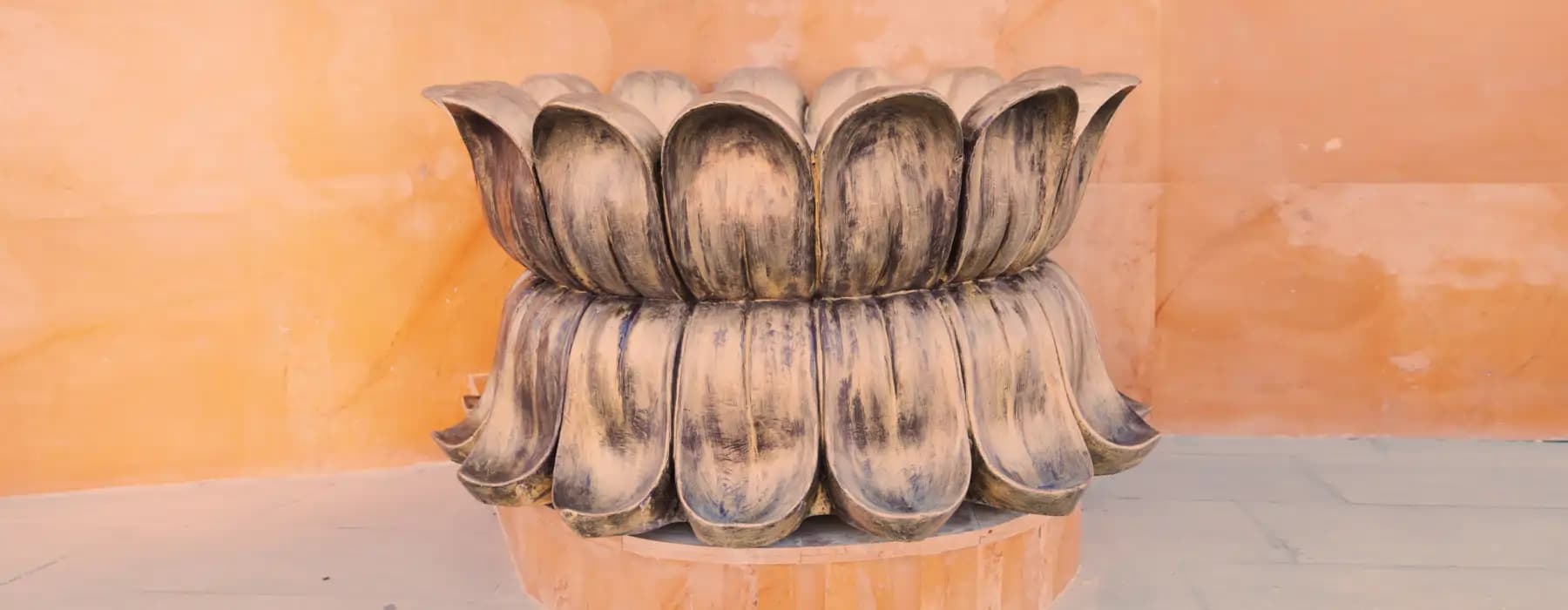
Sacred Connection Between Lord Krishna and the Lotus Flower
The lotus flower is regarded in Indian culture as a symbol of purity, beauty, clarity, and spiritual awakening. Although it grows in mud, it remains untouched by dirt, reminding us to live in the world while staying pure and detached. The lotus holds deep significance in the life and teachings of Lord Krishna.
Lord Krishna is often called Kamal-Nayan (Lotus-Eyed) because his eyes were as beautiful, calm, and deep as the lotus flower, reflecting his compassion, love, and divine charm. In scriptures like the Shrimad Bhagavatam, Vishnu Sahasranama, and others, Krishna is addressed as Kamal-Nabhi (Lotus-Naveled) and Kamal-Patraksha (Eyes like Lotus Petals).
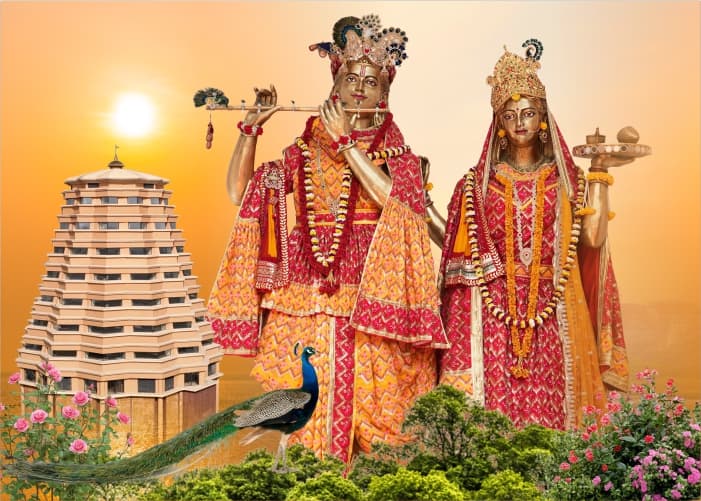
During his childhood in Gokul, Lord Krishna would play with lotus flowers on the banks of the Yamuna. When the Gopis came to fetch water, Krishna would bring them lotus flowers and engage in playful conversations with them. When Krishna played his flute, the lotus flowers blooming on the Yamuna banks would sway, as if dancing to his enchanting melodies. This scene beautifully symbolizes the harmony between devotion and nature, making the lotus an integral part of his divine childhood pastimes.
The Shrimad Bhagavad Gita and Bhagavat Purana describe Krishna as having a heart as gentle as the lotus, remaining pure and detached even while living in the world. His feet are described as soft as lotuses and are a place of refuge for devotees, which is why devotees lovingly refer to his feet as Sri Krishna Pad-Kamal (Lotus Feet of Krishna).
According to one story, before Lord Krishna went to Mathura to defeat Kansa, he bathed in the Yamuna and offered lotus flowers growing on its banks to Lord Shiva and Lord Vishnu, seeking their blessings. After this, he went on to defeat Kansa, freeing Mathura and his parents from fear. Here, the lotus flower symbolizes purity and the divine support in Krishna's victorious journey.
Scriptures like the Shrimad Bhagavatam state that when Lord Vishnu (Krishna's divine form) was resting in yogic sleep on the cosmic ocean, a divine lotus emerged from his navel. From this lotus, Lord Brahma was born, who then created the universe. Thus, the lotus flower is also seen as a symbol of creation and the origin of the cosmos.
Goddess Lakshmi, the consort of Lord Vishnu (Krishna), is called Kamalasna (She Who Sits on a Lotus). The lotus flower is very dear to Goddess Lakshmi, and she is often depicted seated on a lotus while serving Lord Vishnu. The lotus is offered in her worship as a symbol of prosperity, beauty, and peace.
Similarly, Goddess Saraswati, the goddess of knowledge and music, is also depicted seated on a lotus. The lotus symbolizes the purity and clarity of true knowledge.
The lotus flower is also offered during the worship of Lord Ganesha, Lord Shiva, and Surya Dev (Sun God) as it represents purity, devotion, and unconditional love.
In the Bhagavad Gita, Lord Krishna instructs us to live in the world like a lotus, remaining untouched and pure, even while surrounded by the world's challenges.