A Divine and Philosophical Depiction
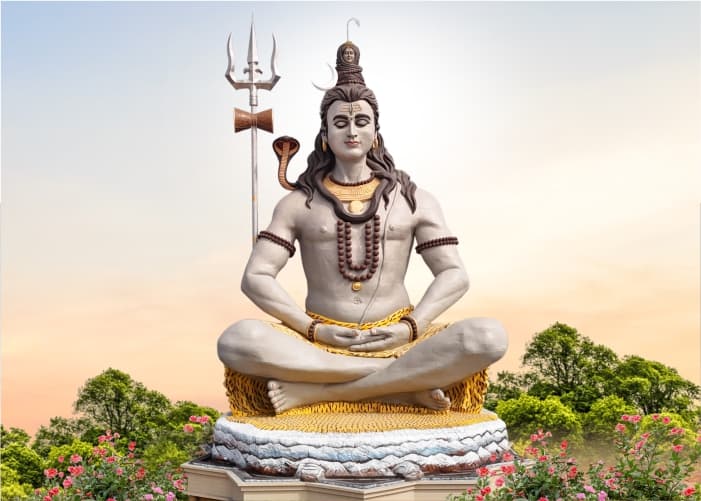
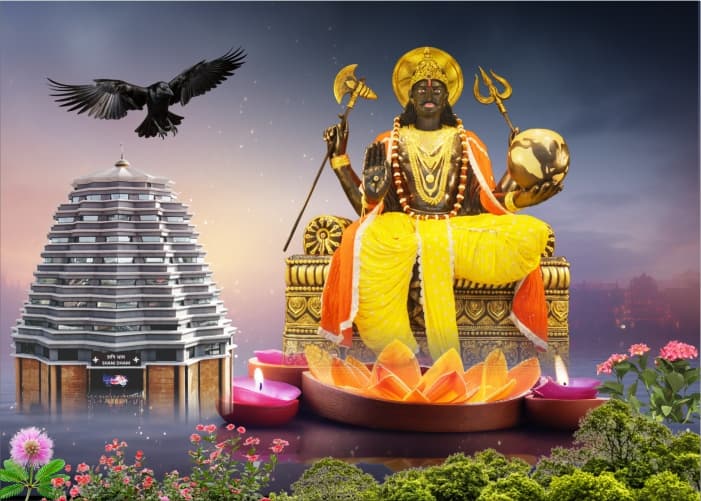
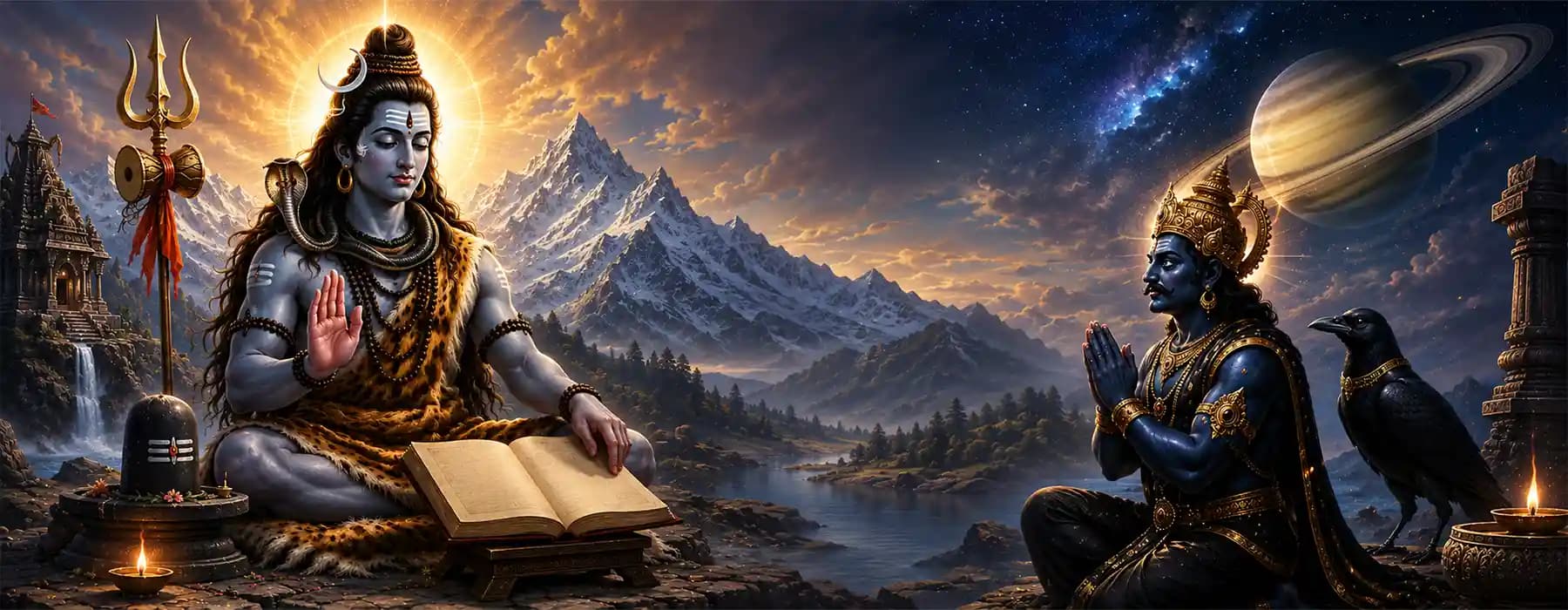
This mural, created at the Chaar Dham Shani Temple, is a grand and deeply spiritual composition. Measuring 12.97 by 5.47 feet, this artwork is not merely a visual masterpiece but also a profound reflection of philosophical, religious, and metaphysical concepts. The mural simultaneously portrays Lord Shiva and Lord Shani, symbolizing the deep and significant relationship between two of the most revered and influential deities in Indian spiritual tradition.
On the left, Lord Shiva is seen in a meditative pose, seated on a tiger skin. Near him are his sacred symbols: the Shiva Lingam, Trishul (trident), and Damru (drum). Behind him, the majestic Himalayan mountains and flowing sacred rivers represent his ascetic nature and peaceful presence. On the right, Lord Shani is seated majestically on a grand chariot. Beside him stands a crow, symbolizing his traditional vahana (vehicle) and his penetrating, karmic gaze. Lord Shani holds a Gada (mace) in one hand, symbolizing justice and discipline, and his other hand is raised in Var Mudra, indicating compassion and divine grace. Lord Shani, son of Surya (Sun God) and Chhaya, is known as the stern deliverer of karmic justice among the Navgrahas (nine planetary deities). Lord Shiva, on the other hand, is considered Anadi (beginningless), Avinashi (indestructible), and the Mahadev (God of Gods).
Yet, according to ancient Puranic legends, even Lord Shiva was once affected by the powerful gaze of Lord Shani. This forms one of the most intriguing stories in Indian mythology:
The Tale — When Lord Shiva faced Shani Dev’s gaze once, Lord Shani humbly approached Lord Shiva and warned him:
“O Lord, the period of my Sade-Sati (seven-and-a-half-year transit) is about to fall upon your zodiac sign. My gaze influences all beings, and even you may experience its effects.”
Though Lord Shiva smiled at this, when the time came, he playfully assumed the form of an elephant and retreated into a dense forest, attempting to avoid Shani's gaze. However, the moment Shani cast his sight upon him, even the mighty elephant form was affected — it wandered, got lost, and endured numerous hardships. This episode reveals a profound truth: Even Lord Shiva, the all-knowing and all-powerful, did not escape the consequences of Shani’s karmic influence. If the Lord of Time (Mahakaal) himself honors the law of karma, then human beings must be even more vigilant about their actions.
Lord Shani is revered as the impartial judge among the Navgrahas. He holds no personal bias or enmity. His justice is based solely on one’s deeds and intentions. In this mural, the union of Shiva’s compassion and wisdom with Shani’s justice and scrutiny sends a powerful spiritual message. Lord Shiva symbolizes foresight and kindness, while Lord Shani embodies righteous discipline and karmic law. Together, they represent the dual forces that govern existence — grace and justice, forgiveness and accountability.
No one, however great, is above the law of karma. Lord Shiva's act of transforming into an elephant shows that even divinity accepts the need for humility and discipline. The crow and mace held by Shani symbolize his sharp observation and unwavering execution of justice. Shiva’s meditative pose inspires self-reflection and inner stillness, urging us to improve our actions rather than fear consequences. It is a rare visual representation that showcases the divine interplay between Shiva and Shani, a theme seldom depicted together in temple art. Every color, posture, and object in the artwork has symbolic depth, creating a tapestry of spiritual education and introspection. It inspires devotees not just to observe but to transform — from being spectators to seekers.