
 Chaardham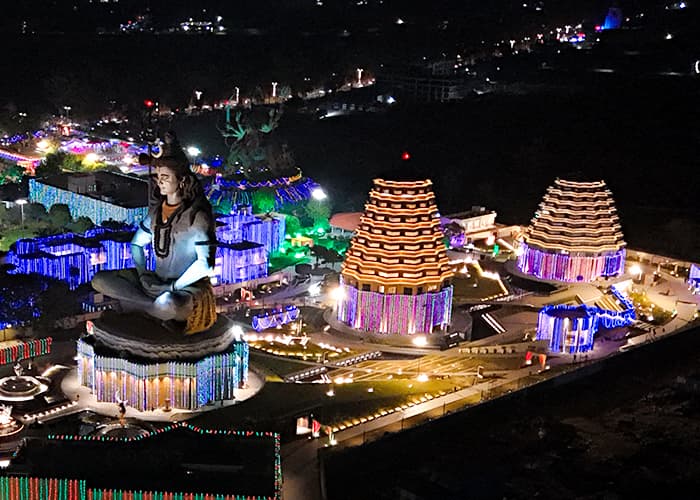
A traditional Char Dham Yatra consists of visiting these four places, that is, Badrinath to Dwarka, Jagannath Puri to Rameshwaram. You need to travel to four different places away from each other, but what if you could experience the spiritual essence and blessing of four powerful dham at one place?
At the Chaar Dham Temple, Vrindavan, this becomes beautifully possible.
Spread across 11 acres, a lush green and spiritually charged campus, Chaar Dham Temple brings together a sacred vibration of Radha Krishna Dham, Shani Dham, Shiv Dham, and Maa Vaishno Devi Dham all within one premises. For devotees, this is not just a visit; it is a complete pilgrimage without travelling much that purifies the mind, uplifts the soul, and fills the heart with devotion.
Dr. J C Chaudhry especially made the Chaar Dham temple so that the people who couldn’t travel far due to health issues, age, time, or any other problem can visit this temple and take the blessings of all four dhams at once.
If you want to perform a complete Char Dham Yatra inside the temple, here is the perfect step-by-step guide.
Grand Welcome by Vignaharta Ganesha!
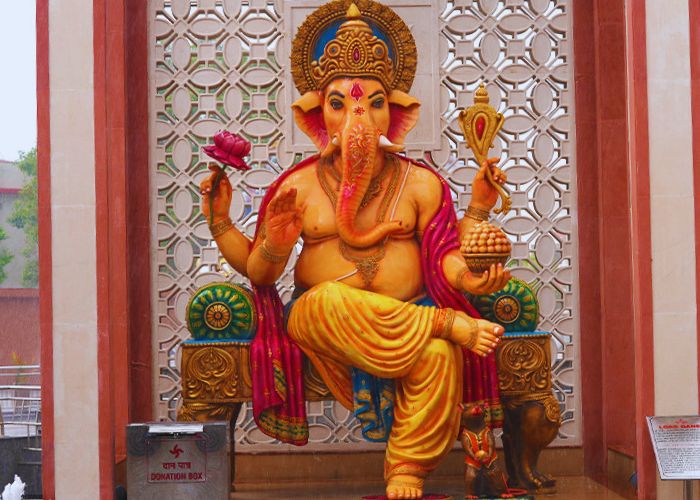
The moment you step inside the temple, you will be welcomed by the Vignaharta Lord Ganesha's grand statue. It feels as if lord ganesha is present there to welcome you to begin your journey of the Chaar Dham Yatra in the temple.
How wonderful it is, right? To begin your journey by doing the darshan of lord ganesha, praying to him for your smooth journey.
Step 1: Begin with Shiv Dham: Dham of Transformation and Liberation
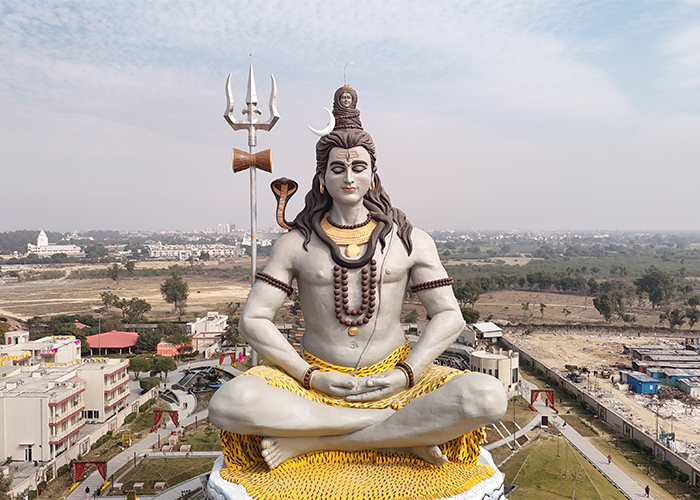
Start your yatra by stepping into the magnificent Shiv Dham, home to the record-winning 187-feet Trishul, one of the tallest in the world.
As you move towards the Shiv Dham, the first thing which you will witness is the grand statue of lord shiva, a 175.6-feet statue. When you see this magnificent statue of Shiva, you will be awestruck. Seeing such a huge statue, one feels as if every sorrow is small, and it makes the devotees realize that no sorrow is bigger than God and cannot stand in front of God.
Devotees who visited this place have admitted that the presence of Mahadev here is transformative and deeply purifying.
What to do here:
Do jalabhishek and offer Bilpatra or water to Shivling.
Witness sacred Panchbhuteshwar lingas, Shiv Parivar Idol, and stories of Mahadev carved on the walls of the temple.
Soak in the energy while sitting for a minute in silence under Mahadev’s energy.
Pray for inner clarity, peace, and freedom from past burdens.
Shiv Dham shifts your spiritual state from discipline to deep inner awakening. The more time you spend in Shiv Dham, the more you will feel as if Shiva is taking away all your sorrows.
Step 2: Move to Radha Krishna Dham: The Dham of Love and Devotion
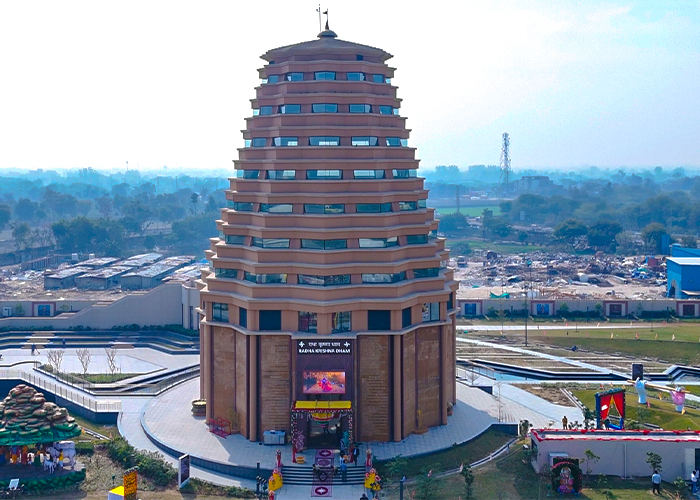
After visiting Shiv Dham, you enter Radha Krishna Dham. As you walk towards the dham in the way, you will notice various sculptures related to Radha Krishna, such as Govardhan Parvat, Kaliya Nag Mardan, and Love Mount, depicting the love of Radha Krishna. Every sculpture will make you feel as if it were alive and talking to you.
Even around the temple, you can see many sculptures related to Radha and Krishna. As soon as they enter the temple, the devotees become mesmerized by seeing the form of Radha Krishna, and they feel very light and peaceful, as if all their troubles have vanished. You can experience the unique stories of Radha Krishna by looking at the artwork on the walls of the temple.
The soothing chants, vibrant idols, and peaceful ambience immediately calm the mind. Spend a few moments here absorbing the energy of the Dham.
What to do here:
Surrender all your thoughts in front of the deity
Sit quietly, close your eyes, and meditate or chant to uplift your vibrations.
Starting with Radha Krishna aligns your heart with divine love before stepping into the remaining dhams.
Step 3: Proceed to Shani Dham: Dham of Justice, Karma, and Discipline

Next, walk towards the Lord of Karma and justice, i.e., Shani Dham. As you walk towards the Shani Dham, you will see Lord Shani within the temple premises. Looking at the statue of Shani Dev, it feels as if all your deeds are being accounted for. His statue always encourages you to be fearless and truthful in your actions. Every Saturday, crowds of devotees gather to offer sesame seeds and light lamps at the Navgraha Puja site and visit the Shani Temple to pray for the destruction of their evil planets.
What to do here:
Light a diya or offer mustard oil on the navgrah puja sthal.
Reflect on your actions and responsibilities.
Seek protection from negativity and strength to walk the right path.
This stop adds grounding, focus, and inner stability to your yatra.
Step 4: Conclude at Maa Vaishno Devi Dham: Dham of Shakti and Divine Protection
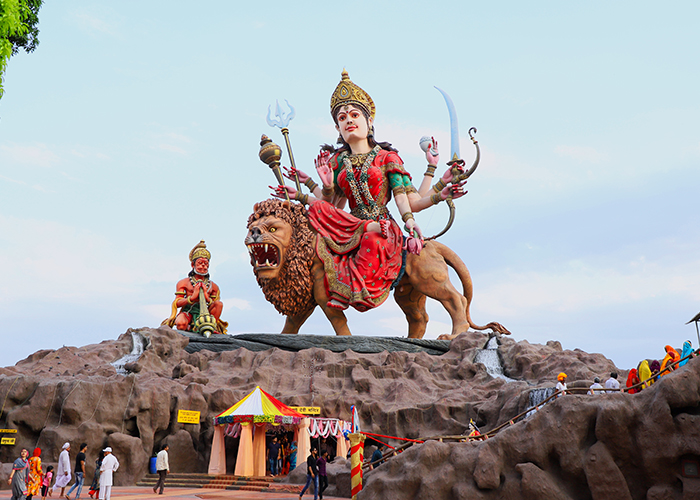
After visiting Shani Dham, you enter Maa Vaishno Devi Dham, where you witness a 141-foot grand statue of Maa Vaishno Devi, another record-holding statue of the temple.
Below the statue, there is a gufa where you can witness the nine forms of Maa along with Bhairoji at the end of the cave. When you step inside the gufa along with Maa's powerful aura, you will feel the water flowing through your feet. The cave will remind you of the original gufa.
Her presence radiates power, compassion, and divine protection.
What to do here:
You can offer a chunari to maa
Sit and soak in the energy of Maa within you, releasing all your negativity.
Why This Chaar Dham Yatra Is So Special
The Chaar Dham Temple was built with a deep sense of purpose. Devotees who cannot travel miles to visit the Char Dham for various reasons can experience that feeling by visiting the Char Dham. The temple has been constructed in such a way that walking from one temple to another will actually feel like you are doing your char dham yatra and have received the blessing of all the four dhams at one place.
It’s a rare opportunity where a complete yatra becomes possible without long-distance travel, yet with all the spiritual depth.
Whether you visit with family, friends, or alone, the Chaar Dham Temple in Vrindavan ensures your journey is fulfilling, peaceful, and truly divine.